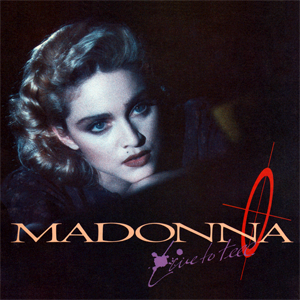
“Live to Tell” is a pop ballad by Madonna from her 1986 album True Blue and featured in the film At Close Range, starring then-husband Sean Penn. Originally composed by Patrick Leonard as an instrumental for Fire with Fire, the piece was rejected, prompting Madonna to adapt it for At Close Range by writing lyrics, adding melodies, and co-producing the track. Exploring themes of deceit, emotional trauma, and secrecy, the song was released on March 26, 1986, as the album’s lead single and received widespread acclaim for its introspective tone and Madonna’s vocal maturity.
Critics praised the song’s emotional weight, with AllMusic, Stereogum, PopMatters, and The New York Times highlighting its sophistication and vulnerability. It was called one of Madonna’s best ballads, with some noting its theatrical, torch-song influences. The music video features her alone in a dim studio, intercut with film clips. Controversy arose during the 2006 Confessions Tour, when Madonna performed the song suspended from a mirrored cross wearing a crown of thorns. Religious leaders condemned the act as blasphemous, but she defended it as a statement on child suffering from AIDS in Africa.
The song was recorded at Channel Recording Studios in Los Angeles, using Madonna’s demo vocals for their raw emotion. Musically, it’s in F major, set at 112 beats per minute, and features a throaty vocal performance over synthesizers and electric piano. Lyrically, it begins with “I have a tale to tell / Sometimes it gets so hard to hide it well,” and includes the refrain “A man can tell a thousand lies / I’ve learned my lesson well / Hope I live to tell the secret I have learned,” underlining its introspective themes. Madonna has said the lyrics draw from pain and yearning, possibly autobiographical or imagined, and referenced F. Scott Fitzgerald as a loose inspiration.
“Live to Tell” reached number one on the US Billboard Hot 100 and Adult Contemporary charts, topped charts in Canada and Italy, and peaked at number two in the UK and several European countries. It earned silver certifications in the UK and France and became one of Madonna’s most-played radio hits in 1986. Retrospective rankings by Slant Magazine, Glamour, and Parade continue to cite it as one of her most emotionally resonant works, often unmatched by her later ballads. The song remains a staple in compilations and covers, celebrated for its lyrical depth and haunting atmosphere.
|
|
SINGLES
Live to Tell
Papa Don't Preach
True Blue
Open Your Heart
La Isla Bonita
|