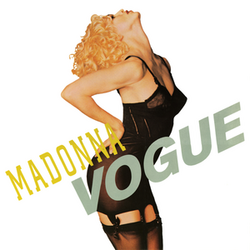
Released in 1990, Madonna’s “Vogue” became one of the defining dance anthems of the early ’90s, showcasing her ability to blend catchy pop with underground culture. The song was inspired by the voguing dance style, which emerged from New York City’s LGBTQ+ ballroom scene, particularly among Black and Latino communities. Madonna’s track brought voguing into the mainstream, combining a house beat with sleek, stylish production that invited listeners to strike poses and celebrate individuality. The song’s lyrics pay homage to Hollywood’s Golden Age stars, referencing icons like Greta Garbo, Marilyn Monroe, and Fred Astaire, which added a glamorous and timeless flair to the track.
Musically, “Vogue” stands out with its infectious rhythm, crisp drum machine beats, and a spoken-word bridge delivered by Madonna herself, which instructs listeners on how to “strike a pose.” Produced by Shep Pettibone, the track merges elements of dance, house, and pop, making it both club-ready and radio-friendly. Its release was accompanied by a striking black-and-white music video directed by David Fincher, which emphasized sharp choreography, high fashion, and visual references to classic Hollywood glamor. This video played a significant role in cementing the song’s cultural impact, helping to popularize voguing beyond the underground ballroom scene.
Beyond its commercial success—it topped the charts in multiple countries and became one of Madonna’s signature hits—“Vogue” holds lasting cultural importance. It introduced mainstream audiences to queer culture at a time when LGBTQ+ visibility was limited, especially during the AIDS crisis. The song has since been recognized for its role in celebrating self-expression, empowerment, and diversity. Madonna’s embrace of voguing helped bring attention and respect to a marginalized community, influencing fashion, music, and dance for decades. “Vogue” remains a symbol of fearless creativity and a timeless dance anthem that continues to inspire new generations.
|
|
SINGLES
Vogue
Hanky Panky
|