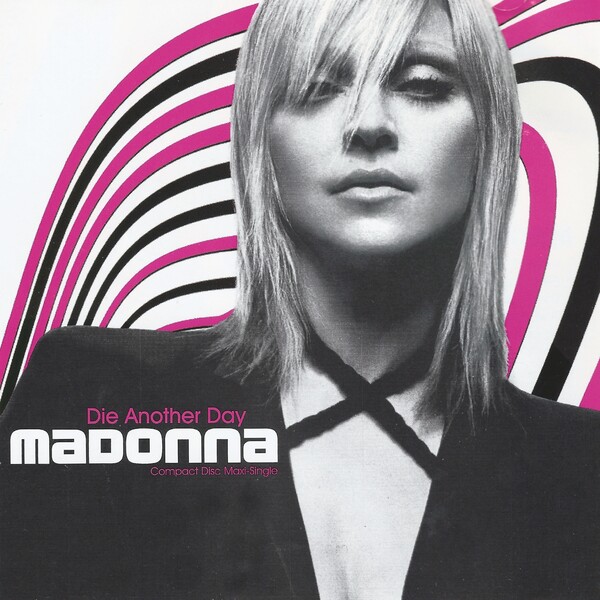
Madonna’s 2002 single “Die Another Day” marked one of her most ambitious crossovers between pop music and cinema, serving as both the theme for the James Bond film of the same name and as a standalone artistic statement within her catalog. Released in October 2002, the track was co-written and produced with Mirwais Ahmadzaï, continuing their experimental partnership from the Music and American Life eras. Instead of following the lush orchestral traditions of Bond themes, Madonna offered a bold departure—an edgy, electronic track built on fractured beats, vocal distortion, and heavy synths. This unorthodox sound polarized critics but underscored her reputation for breaking conventions, merging espionage mystique with futuristic club sensibilities.
The single was accompanied by a high-budget, cinematic music video directed by Traktor, which visually mirrored the film’s themes of duplicity, survival, and conflict. Madonna plays dual roles, locked in combat with herself while imprisoned and tortured, symbolizing inner battles as much as external ones. The imagery—chess games, electric shocks, and samurai duels—elevated the video into an iconic, surreal interpretation of the spy world. Far from a straightforward promotional clip, it functioned as a standalone short film that blurred the line between pop performance and cinematic spectacle, highlighting Madonna’s fascination with self-destruction, transformation, and reinvention.
Commercially, “Die Another Day” was a global success, charting within the top ten in over twenty countries, including the United Kingdom, Canada, Italy, and Spain, while peaking at number eight on the U.S. Billboard Hot 100. It became one of the best-performing Bond themes in terms of chart placements, despite diverging dramatically from the franchise’s sonic tradition. The single’s remixes, created by artists like Dirty Vegas, Brother Brown, and Deepsky, found additional success in clubs, making the track a staple in early-2000s electronic dance scenes. The blending of Bond glamour with Madonna’s avant-garde production allowed the song to stand out as one of the most experimental entries in the Bond canon.
In retrospect, “Die Another Day” reflects Madonna’s refusal to conform, even when contributing to an established cultural institution like James Bond. It bridges cinematic grandeur with experimental electronica, while also foreshadowing the themes of mortality, duality, and American identity that she would explore more deeply in American Life. By pushing the boundaries of what a Bond song could be, Madonna not only contributed a bold statement to her own career but also expanded the possibilities for the franchise’s musical future.
|
|
SINGLES
Die Another Day
American Life
Hollywood
Nothing Fails
Love Profusion
|