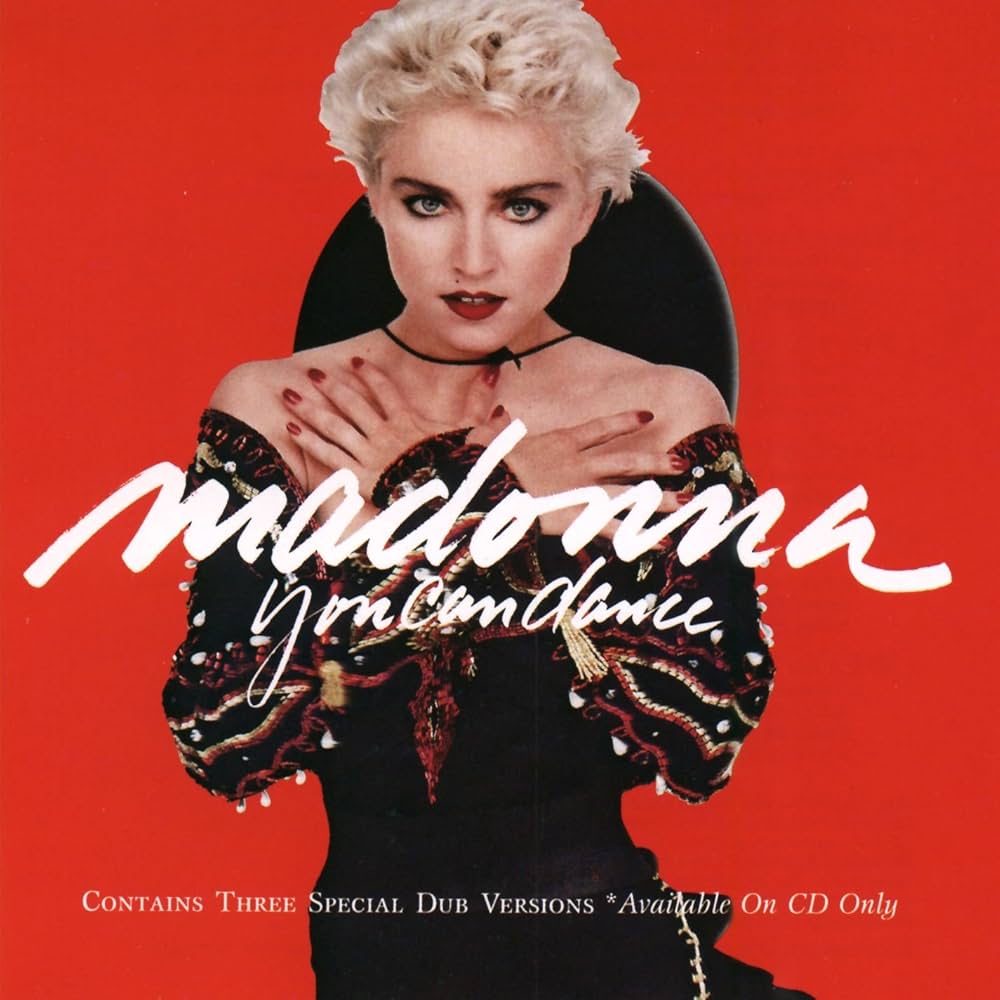
Released in November 1987, You Can Dance marked Madonna’s first official remix album and underscored her pivotal role in shaping the relationship between pop music and dance culture. By this point, Madonna was already an international superstar, and this project served both as a celebration of her dominance on the dance floor and as a gift to club audiences who had fueled her rise. The album compiled extended remixes of tracks from her first three studio albums—Madonna, Like a Virgin, and True Blue—and reimagined them into seamless, continuous dance sets that reflected the energy of the era’s club scene. At a time when remix albums were relatively uncommon, You Can Dance demonstrated Madonna’s forward-thinking embrace of DJs, dance mixes, and alternative versions of her music, which in turn helped solidify remix culture as a mainstream phenomenon.
The tracklist included extended mixes of seven songs, each reworked with greater emphasis on rhythm, beats, and instrumental layering. Dance floor staples such as “Holiday,” “Into the Groove,” and “Everybody” were given new life, with longer intros, breakdowns, and atmospheric effects designed to keep crowds moving. “Physical Attraction” and “Over and Over” provided deeper cuts, spotlighting Madonna’s ability to infuse her music with both attitude and sensuality. Additionally, You Can Dance introduced one new track, “Spotlight,” co-written by Curtis Hudson of “Holiday” fame, which carried Madonna’s unmistakable pop-dance sensibility and further extended her catalogue of club anthems. The non-stop mix format, combined with overdubbed crowd noise and transitions, gave the album the feeling of a live DJ set, offering fans an immersive experience that captured the vibrancy of 1980s nightlife.
Commercially, You Can Dance was a success, reaching multi-platinum status in several countries and selling over five million copies worldwide, a remarkable feat for a remix album. While it did not produce traditional hit singles in the United States, “Spotlight” found chart success in Japan, and the album itself resonated strongly with international markets. More importantly, its legacy lies in how it validated remixing as an art form and set a precedent for future pop stars to release their own remix compilations. The project highlighted Madonna’s symbiotic relationship with club culture and her willingness to innovate beyond conventional album formats. You Can Dance not only reinforced her identity as a dance music icon but also revealed her instinct for staying ahead of cultural trends, ensuring her influence extended beyond pop radio into the heart of global nightlife.
|