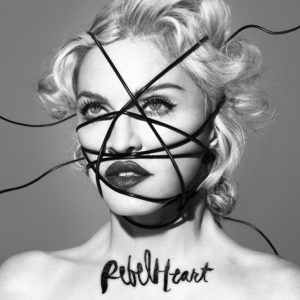
Madonna’s Rebel Heart, released in March 2015, is one of her most ambitious and eclectic albums, blending themes of defiance, vulnerability, and self-reflection. Emerging after a series of leaks that forced her to rush-release several tracks, the project carries an air of resilience and determination. Musically, it traverses a wide spectrum of styles—pop, electronic, reggae, trap, acoustic balladry, and even gospel flourishes—reflecting Madonna’s refusal to be confined to a single sound or era. Lyrically, it is deeply personal, juxtaposing fiery anthems of empowerment with tender confessions of regret, love, and mortality. The album’s duality is encapsulated in its title, Rebel Heart, which positions Madonna as both a provocateur and a seeker of truth, balancing her public persona with her private struggles.
The album is structurally expansive, containing nineteen tracks on the deluxe edition, which highlight Madonna’s willingness to experiment with contemporary sounds while maintaining her signature sensibilities. Songs like “Living for Love” and “Ghosttown” showcase her melodic strength and vulnerability, the former presenting resilience through heartbreak and the latter imagining hope in apocalyptic ruins. “Bitch I’m Madonna,” featuring Nicki Minaj, leans into bold, chaotic EDM energy, contrasting with the stripped-down intimacy of “Joan of Arc” and “HeartBreakCity.” Production collaborators such as Diplo, Avicii, Kanye West, and Blood Diamonds bring modern textures—trap beats, dubstep drops, tropical influences—that situate the record firmly in the 2010s pop landscape, yet Madonna’s lyrical honesty and melodic instincts prevent it from sounding derivative. This dynamic range underscores her enduring ability to reinvent herself while still grounding her music in emotional candor.
At its core, Rebel Heart is not simply a pop record but a meditation on identity, resilience, and artistic legacy. Madonna confronts her critics directly in “Unapologetic Bitch” and “Iconic,” reveling in her refusal to bow to expectations, while songs like “Wash All Over Me” and “Rebel Heart” display a surprising softness, acknowledging her mistakes and vulnerability without sacrificing strength. The push-and-pull between rebellion and introspection creates one of her most revealing works, offering a rare glimpse of the woman behind the icon. While the album divided critics—some praising its scope, others faulting its length—it stands as a testament to Madonna’s uncompromising vision and her refusal to fade into nostalgia. Rebel Heart celebrates her enduring spirit as both a rule-breaker and a deeply reflective artist, cementing her place in contemporary pop culture as someone still evolving, still fighting, and still unafraid to bare her soul.
|