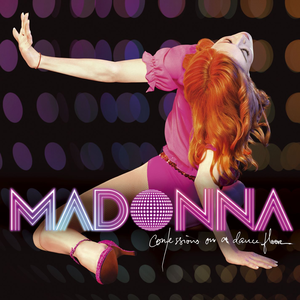
Madonna’s 2005 album Confessions on a Dance Floor marked a dazzling reinvention, both a return to her club roots and a bold modernization of electronic dance music. After the reflective American Life, she pivoted to pure escapism, embracing the thrill of the dance floor as a space of liberation, joy, and catharsis. Working closely with DJ-producer Stuart Price, Madonna crafted a seamless, continuous mix of 12 tracks designed to be experienced as one unbroken journey, echoing the flow of a DJ set in a nightclub. This concept gave the album a unique identity, blending disco nostalgia with contemporary electronic beats, and capturing the energy of dance culture at the height of the 2000s.
The album’s lead single, “Hung Up,” famously sampled ABBA’s “Gimme! Gimme! Gimme! (A Man After Midnight),” a rare privilege granted by the reclusive Swedish group. The track became an international smash, reintroducing Madonna as both timeless and forward-thinking. From there, the album unfolds with tracks like “Sorry,” which showcases multilingual apologies over a pulsing rhythm, and “Jump,” an anthem of courage and independence. “Get Together” evokes euphoria in connection, while “Future Lovers” nods to Giorgio Moroder’s spacey disco innovations. These songs collectively reinforce Madonna’s longstanding ability to fuse infectious pop hooks with deeper thematic undercurrents of self-expression, empowerment, and emotional release.
Stylistically, Confessions on a Dance Floor is a balancing act between homage and innovation. Madonna tips her hat to disco and early house music while filtering everything through sleek, futuristic production. Lyrically, she intertwines personal reflection with universal themes—heartache, forgiveness, resilience, and spiritual longing—yet always frames them within the celebratory atmosphere of the club. The continuous mixing of tracks underscores this cohesion, making the album more than a collection of singles; it’s an immersive, uninterrupted experience that mirrors the intensity of a night out.
Critically, the album was hailed as a triumphant comeback. It received acclaim for its cohesive vision, Madonna’s vocal delivery, and its sophisticated production, earning a Grammy Award for Best Electronic/Dance Album. Commercially, it dominated charts worldwide, topping over 40 countries and solidifying her relevance in a shifting pop landscape. Beyond sales, the record’s impact lay in how it reaffirmed Madonna’s position as both innovator and chameleon. By transforming the dance floor into a confessional booth, she created an album that celebrated movement while encouraging listeners to confront vulnerability and truth. Confessions on a Dance Floor thus stands as one of her defining works, a luminous reminder of music’s power to unite body, mind, and spirit in rhythm.
|