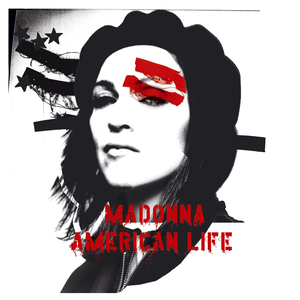
Released in April 2003, Madonna’s American Life album marked a politically charged and introspective chapter in her career. Collaborating once again with Mirwais Ahmadzaï, she fused electronic beats, folk influences, and avant-garde production to explore themes of fame, consumerism, war, and personal reflection. The album reflected Madonna’s growing disillusionment with materialism and the United States’ sociopolitical climate, particularly in the aftermath of 9/11 and the Iraq War. Musically, American Life combined glitchy electronics, minimalist arrangements, and vocoder effects, producing a sound that was experimental and starkly different from the upbeat dance-pop of her Music era. This album revealed a Madonna willing to confront controversy and express vulnerability while challenging listeners to engage with provocative social commentary.
Lyrically, the album is both confessional and critical. The title track, “American Life,” critiques the emptiness of consumer culture and questions the pursuit of superficial success. Songs like “Hollywood” examine the allure and pitfalls of fame, while “Love Profusion” and “Nothing Fails” explore personal intimacy, spirituality, and emotional vulnerability. Tracks such as “Mother and Father” delve into familial reflection, highlighting her introspection about relationships and upbringing. Madonna’s vocal delivery alternates between detached irony, introspective softness, and pointed criticism, complementing the album’s eclectic production. This combination of thematic depth and experimental sound created an album that was polarizing yet compelling, revealing a more thoughtful and reflective side of the pop icon.
The album’s visual and promotional strategy emphasized its social commentary. The provocative “American Life” music video, which included anti-war imagery and critique of celebrity culture, was ultimately withdrawn from circulation due to its controversial content. Despite limited promotion, the album generated international discussion, with critics divided over its artistic ambition versus its perceived heavy-handedness. Commercially, American Life debuted at number one in several countries, including the United States, though its sales did not match the massive success of Ray of Light or Music. Critics praised Madonna’s willingness to take creative risks and confront sociopolitical issues, even if some considered the music less accessible. Over time, American Life has been reassessed as a bold, daring work, reflecting an artist unafraid to merge experimental soundscapes with provocative commentary. Ultimately, the album represents Madonna’s fearless engagement with personal and cultural reflection, solidifying her reputation as a pop innovator willing to challenge norms and expectations while addressing the complexities of life, fame, and society in the early 2000s.
|